Sound absorption formula by Wallace Clement Sabine

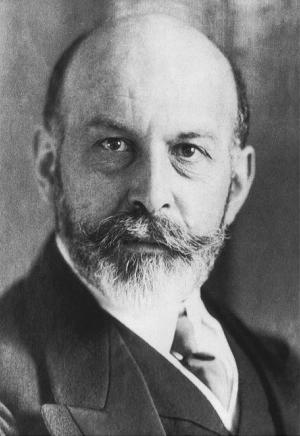
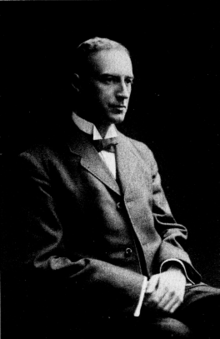
Photo of professor Wallace Clement Sabine
Wallace Clement Sabine
Sabin is the sound absorption of a surface the size of one square foot or .92903 sqm (0.3048 cm x 0.3048 cm) with an absorption coefficient of 1. The name is derived from the Americaans physicist Wallace Clement Sabine. In the early 20th century he discovered the importance of reverberation and sound absorption for room acoustics. The law of Sabine.

Trough experimenting, Sabine was able to determine that there was a relationship between the quality of the acoustics, the size of the chamber and the amount of surface absorption. He defined the reverberation time in to a formula, which is still the most important characteristic used for gauging the acoustical quantity of a room, as number of seconds required for the intensity of the sound to drop from the starting level, by an amount of 60 dB (decibels).

Formula:

T = (V / A) . 0,161 s

Legenda
T = The reverberation time
V = The room volume
A = The total absorption area

Life of Wallace Clement Sabine
Sabine graduated at the Ohio State Universitey in 1886 at the age of 18. After that, he joined the Harvard University and remained a faculty member. He was also the acoustical architect of the Boston's Symphony Hall that is considered one of the best concert halls in the world for it's acoustical performance.

With his formula and the study of rooms he determined that acoustically appropriate concert halls had reverberation times of 2 to 2,25 seconds. With shorter reverberation times, the music hall seems to feel too 'dry' to the listener. While the optimal reverberation for lecture is just under 1 second

New concert halls
New halls are made that way that a big peace at the top of the hall can be adjusted from place for a perfect sound according to the perpose wither it is for music or for lecture.

Zaha Hadid (1950) Architect

Landscape Formation One in Basel
Zaha Hadid is a British architect. She was born in Baghdad (now Lady Hadid) and is of Iraqi origin. She studied architecture at the Architectural Association in London. After her studies she worked at OMA (Office for Metropolitan Architecture), a renowned office of architects founded by Rem Koolhaas.

Main achievements
Landscape Formation One in Basel.
Fire Service Building of the Vitra Museum in Basel.
London Aquatics Centre.
Fire Service building at the Vitra Museum in Basel


Mario Botta (1943) Architect

Bank for International Settlements
Mario Botta is a Swiss architect. He was born in Ticino, Italy.

Main achievements
Bank for International Settlements.
Gotthard Bank headquarters in Lugano (1982-1987).
Evry cathedral (1988-1990).
Watarimuseum Contemporary Art in Shibuya-ku (Tokyo) (1990).
San Francisco Museum of Modern Art (1990-1995).
La Fortezza in Maastricht (1991).
Tinguely Museum in Basel (1995).
Museum of Contemporary Art: MART in Rovereto (2002).
Houses in Lacorna, Ticino (2002).

Frank Owen Gehry (1929) Architect

Vitra Museum in Basel
Frank Gehry is a Canadian architect. However, he was born as Frank Goldberg.

Main achievements
Vitra Museum in Basel.
Chiat / Day building in Venice, California.
New World Center in Miami Beach, Florida.
Weatherhead School of Management, Case Western Reserve University in Cleveland, Ohio.
Vontz Center for Molecular Studies, University of Cincinnati.
Dr. Chau Chak Wing Building (2015).
The Experience Music Project in Seattle.
Walt Disney Concert Hall.
Dancing House in Prague.
Neuer Zollhof in Dusseldorf.
Art Gallery of Ontaria in Toronto.
Fish Sculpture in Barcelona.
Gallery of African American Art, Mississippi.
Louis Vuitton Foundation in Paris.
The Guggenheim Museum in Bilbao, Spain.

Johan Nieukerken (1885-1962) Architect

Johan Nieukerken was a Dutch architect. He also erected and office called Van Nieukerken.

Main achievements
Restoration of the Great Church (Our Lady's Church) in Breda (1968).
Mansion Emants Parkstraat, The Hague (1895).
Shop in the High Street, The Hague.
Office building for the Dutch insurance company in Kneuterdijk, The Hague (1898).

Oscar Niemeyer Soares Filho (1907-2012) Architect

Oscar Niemeyer was a Brazilian architect. He was a member of the advisory committee of architects to build a building for the UN in New York in 1947. In addition to many houses and hotels, he created many public buildings. Notable in his work is how he solved the protection from the sun's heat. This is evident in the building for the Ministry of Health and Education in Rio de Janeiro.

Main achievements
Building for the U.N.O. in New York (1947).
Building for the Ministry of Health and Education in Rio de Janeiro.
Theatre in Rio de Janeiro.
Brazilian Pavilion at the International Exhibition in New York (1939).
Casino in Pampulha.
Yacht Club in Pampulha.
Hotel Pampulha.
Television Building.

Arno Carolus Nicolai (1914-2001) Architect

Arno Nicolai was a Dutch architect. Since 1946 he worked at the B.P.M. (Batavian Petroleum Company). He built this company on behalf of residential, office and utility work.

Main achievements
Reformed Church in Oudschonebeek.

Richard Joseph Neutra (1892-1970) Architect

Richard Neutra was an Austrian architect. He was from 1921 associated with Erich Mendelsohn and won with him in 1922 the first prize for building a business center in Jaffa (Palestine). In 1923 he went to America where he represented the new building. He held many senior positions such as the National Committee for the consideration of the school building. In his later years he became a respected man field of education. He also campaigned for better housing.

Main achievements
Business center in Jaffa (Palestine), along with Erich Mendelsohn (1922).
Channel Heights complex of folk housing for 600 families, schools, kindergartens and community center in San Pedro (Los Angeles) (1943).
Health center in Los Angeles.
Building of the Northwestern Mutual Fire Association in Los Angeles.
Crow Island Elementary School in Winetka (1940).
Kindergarten in Los Angeles.
Hospitals in Puerto Rico.

Constantine Muysken (1841-1921) Architect

Constantine Muysken was a Dutch architect. Through his many travels through Italy, he was influenced by the Italian Renaissance.

Main achievements
Former Wassenaar Castle (1879).
Church in Horn (1884).
Uytenbosch Villa in Baarn.

Hermann Muthesius (1861-1927) Architect

Hermann Muthesius was a German architect. From 1896 to 1903 he lived in England, because of this he was influenced by the ideas of William Morris. In Germany, he became one of the main representatives of the Jugendstil, a direction characterized by stylized forms. He realized important buildings and many houses. But more important were his writings. And he founded in 1907 at the Deutsche Werkbund.

Main buildings
Bernhard home in Wilmersdorf, Berlin (1906).
Cramer house in Zehlendorf, Berlin (1913)
Funk station Nauen (1917-1919).
Key publications
Stilarchitektur und Baukunst (1902)
Das englische Haus (1904)
Who Baue ich mein Haus (1915)
Kleinhuis und Kleinsiedlung (1920)

Malt Joseph Chen (1895-1977) Architect

Malt Joseph Chen was a Belgian architect and teacher and director of the Royal Academy of Fine Arts in Liege and Alderman of Public Works in Jupille.

Main achievements
Institute of Civil Engineers.
Building for the newspaper 'La Wallonie'.
Cheap houses in Jupille.

Werner Max Moser (1896-1970) Architect

Werner Moser was a Swiss architect. Besides buildings, he also designed chairs and furniture.

Main achievements
Reformed Church in Zurich-Altstetten, concrete frame clad with sandstone (1939-1941).
Cantonal Hospital in Zurich.
Congress Building in Zurich, along with Haefeli and Steiger.
Apostoliscche Church in Geneva, along with Haefeli and Stiger.

Furniture:
Werner Max Moser Shelves
Moser Gartenstuhl
Wohnbedarf Modell 2 chairs

Karl Moser (1860-1936) Architect

Karl Moser was a Swiss architect. From 1888 to 1915 he was active in Karlsruhe. He then became a professor at the Technische Hochschule in Zurich. After he had applied the Jugendstil, he came back to built with concrete and was one of the first ones built in the newer, more businesslike style in Switzerland.

Main achievements
Paul's Church in Basel (1901).
Kunsthaus in Zurich (1910).
University of Zurich (1911-1914).
Station in Basel (1914).
Church of Saint Anthony in Basel (1926).

Joseph Monier (1823-1906) reinforced concrete

Joseph Monier was a French gardener, and is considered the inventor of reinforced concrete. He made numerous attempts to make sturdy boxes and did this by plastering a network of wire with mortar. In 1867 he also obtained a patent for making concrete planters armed with iron. After that he acquired many patents in the field of reinforced concrete. Unfortunately, he died in poverty.

Main achievements
Pedestrian footbridge in Chazelet (1875).
Water reservoir in Clamart.

Walter Michaelis (1866-1853) Chemist

Walter Michaelis was a German chemist who mainly sought solutions to problems in respect of cement and mortars. He analyzed the manufacture and processing. An inspection of the mortar belonged to it. He is best known as the person who confronted the theory of Le Chatelier in respect crystallization processes that occur in the setting and hardening of the mortar.

Walter came in 1890 with a colloïdechemische theory, in which he argued that arise from the cement clinker colloid solutions, gel and dry out. The name Michaelis is also known by the bacillus of Michaelis, the most dangerous enemy of cement in seawater. This is contested by Candlotsell (Caliumsulfoaluminaat with 3oH2O).

Jan de Meyer (1878-1950) Architect

Jan de Meyer was a Dutch architect. He campaigned for the preservation of the beauty of the ancient cities. He was known for his restoration of many important monumental buildings.

Main achievements
Observation Home for Boys at Cremerplein in Amsterdam (1910).
School girl in Houten.
Flats and houses in Amsterdam and elsewhere.
Restoration of the 'Long John' in Middelburg, after the Second World War.

Joan Melchior van der Mey (1879-1949) Architect

Joan Mey was a Dutch architect. He was an important figure in the Amsterdam School community.

Main achievements
Seafaring House in Amsterdam, contains many tasteful details (1911-1916).
Shopping gallery at the Albus Amsterdam.

Alfred Messel (1853-1909) Architect

Alfred Messel was a German architect. In Italy, he studied to see the Renaissance, this is evident in his first realizations. Later, he created his own style, which first manifested itself in the Wertheim Department Store in Berlin, he applied this to the pillar construction, a construction method that has be imitated many times after this realisation.

Main achievements
Wertheim department store in Berlin (1896-1900).
The Cohn Palace in Dessau.
Buildings of the Berliner Handelsgesellschaft der Nationalbank für Deutschland in Berlin.
Allgemeine Elektrizitäts-Gesellschaft buildings in Berlin.
Infants device Auguste-Viktoria Haus in Berlin.
Landes Museum in Darmstadt, the first museum of modern requirements.
Decorate the throne room of the German embassy building in Rome.
Decorating for the meeting of the Prussian Ministry.

Erich Mendelsohn (1887-1953) Architect

Erich Mendelsohn was an architect born in Germany. He was a representative of the expressionist architecture. He realized many cinemas, shops and factories. In 1935 he went to Palestine and realized important buildings. In 1938 he moved to England and became English citizen. At the beginning of World War II, he settled in the United States where he built a number of Synagogues and Churches.

Main achievements
Einstein Tower observatory in Potsdam (1921).
Spinning in Luckenwalde (1921).
Hebrew University in Palestine.
Medical Center in Palestine.
De La Warr Pavilion in Bexhill-on-Sea, along with Chermayeff.
Maimonides Hospital in San Francisco.
Park Synagogue in Cleveland.

Doeke Meintema (1877-1935) Architect

Doeke Meintema was a Dutch architect.

Main achievements
Nursing home in Hilversum.
Council House in St. Anna Prochie.
Workers and middle-class homes in Leeuwarden.
Workers and middle-class homes in Harlingen.
Farms in Friesland.